OVERVIEW
The educational artifact is a modification to language learning educational videos by utilizing props and choreographed gestures, that targets children under the age of three.
CHALLENGE QUESTION
How to evaluate educational media for children language acquisition?
The question proposed explores the evaluation of children’s educational programs which aims to improve children’s language performance. Another way of looking at this question is, what videos enhance and optimize children’s language learning? That is the question many people looking to educational videos want to know. Many parents allow their children to watch videos on Youtube or Netflix, in hopes of them learning from these programs. How do the parents know if their child is receiving the information and knowledge from programs, such as, Arthur or Sesame Street.
CHALLENGE QUESTION & ARTIFACT
Many studies have been done to investigate if children learn language from television. The conclusions from the research on how children learn language effectively via television, shows that children over the age of three can learn language from video. Those under the age of three can learn language, but typically nouns rathers than verbs are acquired, and the children do not fast map words learned from videos at the same rate as children over the age of three. Fast mapping is the process of quickly learning a new word used in a familiar context.
These conclusions lead to the idea of my artifact. Research and methods have been made about how children learn from video, so I synthesized the research to modify language programs to maximize language learning. The artifact is intended for children under the age of three because most literacy and language programs target children over the ages of three.
HOW TO EVALUATE EDUCATIONAL MEDIA?
Target Age
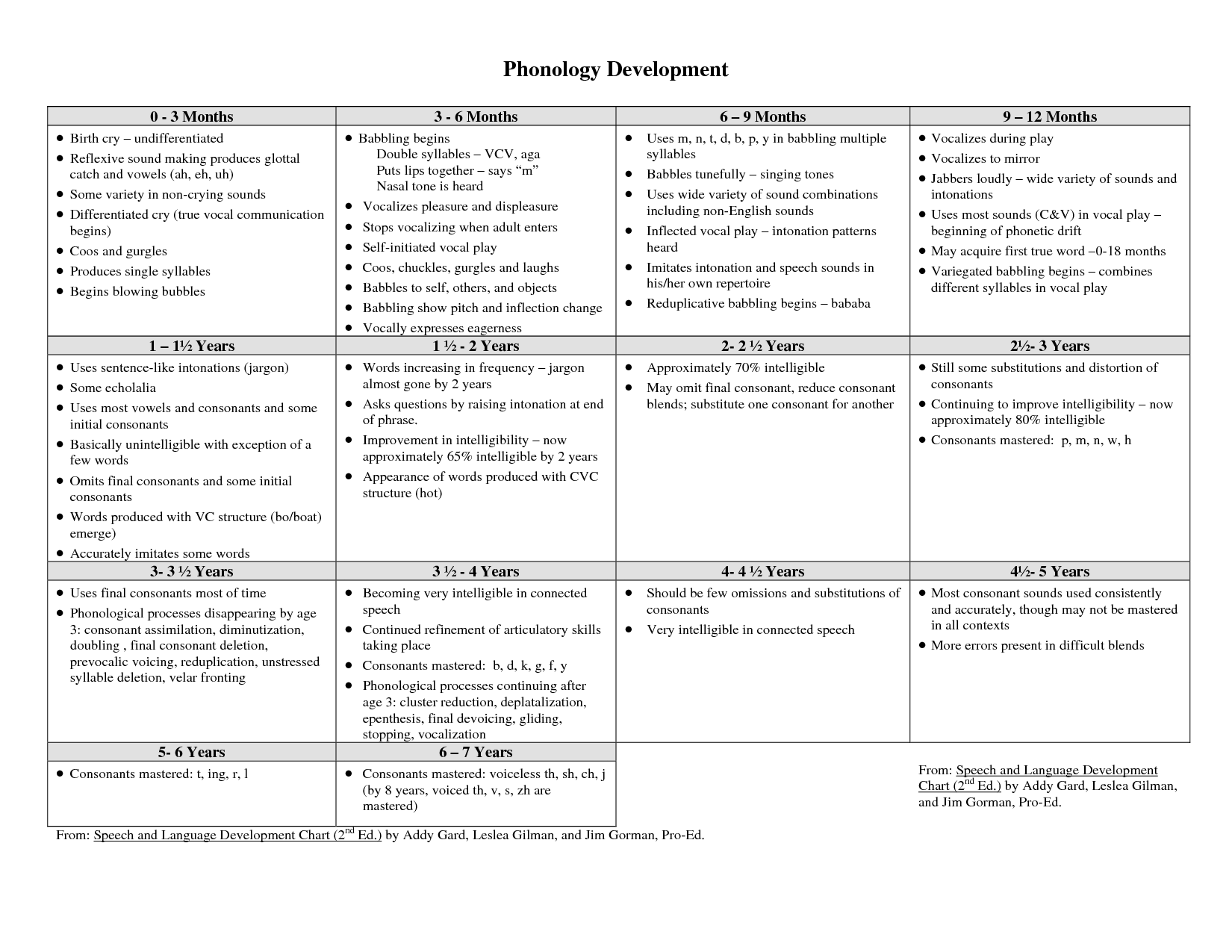
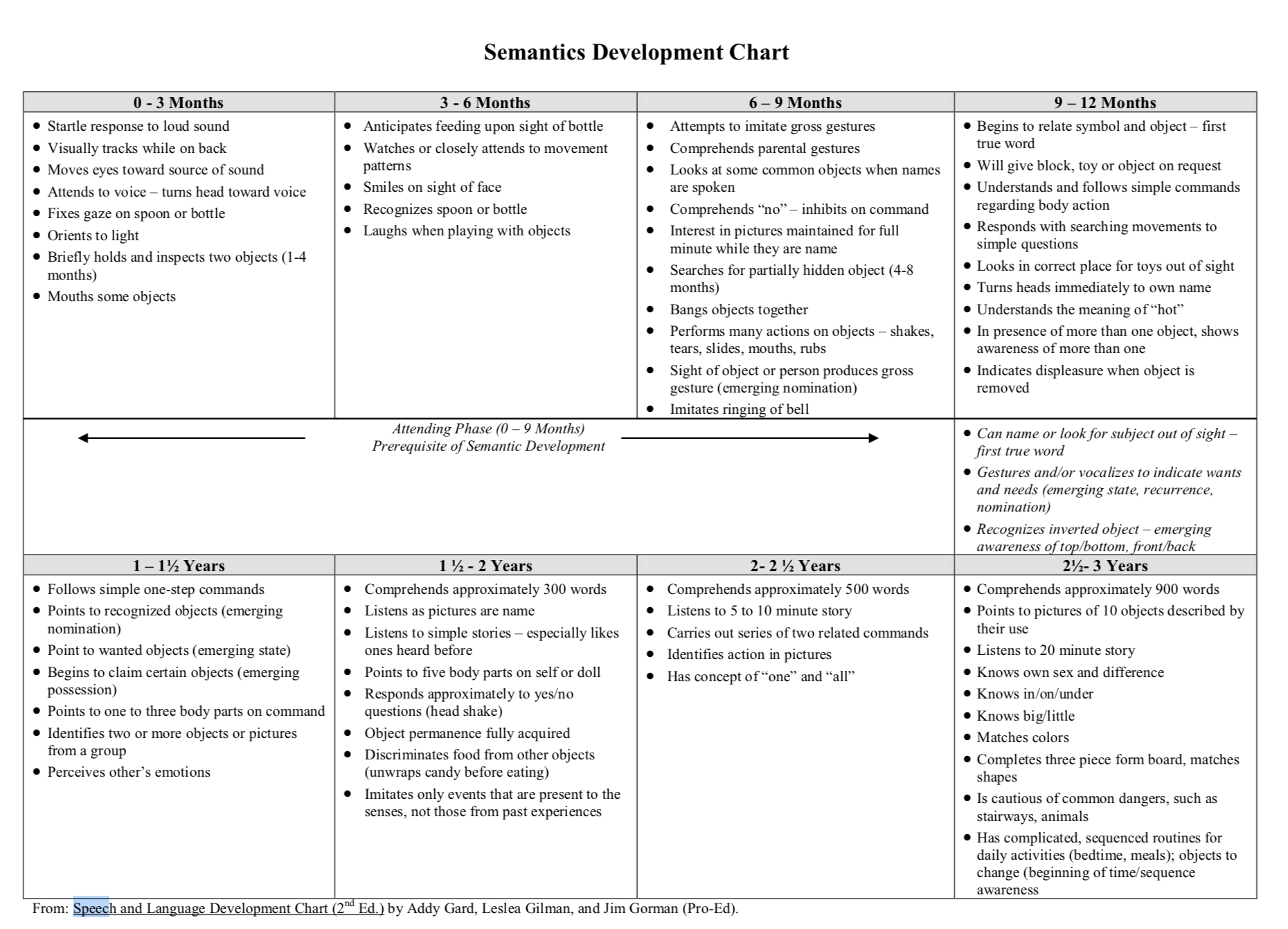
The most significant factor in evaluating educational media is the target age of the media. Teachers and parents should provide children with age appropriate material to optimize improvement of language performance and competency. Phonetics is the study of sound and phonology is the study of sound patterns. The mastery of phonetics and phonology is a critical component to children building their language performance. They cannot store and produce words, without the knowledge of the required sounds. When targeting young children, their mastery of these skills can be used to evaluate the effectiveness of the language learning program. Mastery can be measured by accuracy, precision, and recall with and without prompting. Langauge competency can be measured through semantic development. Some phonological and semantic milestones for children are listed below.
ARTIFACT
Please see an overview of the artifact here.
The innovation was designed for parents and teachers seeking language learning educational videos. The videos are designed to be watched by more than person, to encourage social interaction. Each video will have a theme and target words, that are age appropriate vocabulary that align with the phonological milestones associated with the age. The video’s storyline is short and unfolds logically and slowly. Children under three years old need live interaction to learn language effectively, but there is a void in educational media for that audience.
To achieve the outcome of language learning, parents and teachers can engage with the children by following along the video, using real life objects or hand gestures to guide the children’s learning. For example, songs similar to the Incy Wincy Spider that have choreographed routine, can be used in the video. Hand gestures can build motor skills for sign language development .
Children are able to learn sign language as early as six months. Sign language gives children pre verbal communication that produces many benefits. According to Educational Play Care, studies show that children with the ability to perform sign language show the following advantages:
- Accelerated speech and emotional development
- Frustration level decrease
- Strengthen learning of educational concepts such as ABC’s, animals, and other specific themes
- Aids memorization of words because of the muscle memory. Also, the more senses involved in learning, the greater memory retention the child will have
- Improves attentiveness to social gestures of others as well as of themselves
- Larger speaking vocabulary and ability to form longer sentences
- Early reading and larger reading vocabulary
The gestures used in the video can also be facial expressions. When children are building their phonetic inventory, visual cues to pronounce sounds are critical. This is where the social interaction is very helpful. Nonverbal signals, such as, kissing sounds can be used to help develop and strengthen the articulators.
ARTIFACT’S Development
To make this artifact come to life, more time is needed than the assignment is allotted. Listed below are the stages of the video, that would be implemented to create this artifact.
- Create content divided into following age ranges:
- 6-12 Months
- 12-18 Months
- 18-24 Months
- 24-30 Months
- 30-36 Months
These age ranges are rooted in the semantic and phonological development ages ranges. This allows the videos to provide tailored themes and vocabulary that are within the child’s zone of proximal development.
- Develop target words based on the the phonetic development of age
The target words need to be words that are similar to the words that child can produce or words that are contextually familiar. For example, many of the target words for children ages 6-12 months would be focused on words that can be expressed through sign language, and lingusitc markers like “Shhh” or “Mmmm”.
- Develop themes that can express and feature the target words
The theme is important because it influences the choice of words and songs used in the video.
- Create songs
Children are attracted to repetitive, upbeat songs, with simple melodies, according to Beatriz Ilari, an associate professor at the University of Southern California’s Thornton School of Music.
- Create gestures, using baby sign language and facial expressions that will align with the story and songs
ARTIFACT’S OBJECTIVE
- Improve the vocabulary of the child’s target language (Sign Language, English, etc. )
- Utilize children’s screen time for educational purpose
The results of the objectives are salient. To assess the child’s improvement in communication observations can be done, as well as, an assessment can be done to demonstrate the child’s ability to memorize and recall information. The assessment would test skills, such as, memory, recall, ability to follow directions, and phonological accuracy.
The question was suggested because of the growing amount of children I noticed that were able to consume more television than other generations, because of mobile devices. The goal was to create something, that can maximize that time.
Resources
https://www.educationalplaycare.com/blog/sign-language-benefits-for-young-children/
https://www.thedailybeast.com/the-science-of-why-baby-shark-is-so-freaking-catchy?ref=scroll
https://www.ncbi.nlm.nih.gov/pubmed/3608655
http://www.colorincolorado.org/article/using-childrens-television-learn-literacy-and-language
https://www.verywellfamily.com/how-do-children-learn-language-1449116
 Khadija Imara: My EDTECH Learning Log